A limited-budget product in a competitive, low-conversion category, where the standard keyword-first playbook would have burned the budget fast. So we built a different strategy, led by ASIN targeting, that held CPC under $0.70 and scaled the account from $586 to $27,825 a month. Every figure below comes from the account’s Amazon Ads Console and Business Reports.
$586 to $27.8K
Monthly sales
under $0.70
CPC held
8.44%
ACoS, month 7
4.62%
TACoS, month 7
At a Glance
Situation: A tight budget in a competitive category with naturally low conversion and expensive clicks
What we changed: An ASIN-targeting-led strategy, constant bid and negative tightening, and golden keywords harvested into ranking
Result: $586 to $27,825 a month in seven months, CPC under $0.70, ACoS down to 8.44%
The Situation
A product entering a competitive category with a naturally low conversion rate, backed by a limited advertising budget. Those two constraints together are where most launches stall: clicks were expensive, conversion was hard won, and there was not enough budget to muscle through with a standard approach. Client identifiers have been removed.
The Challenge
The default Amazon playbook is keyword-first: bid on the category’s main search terms and push. In a competitive, low-conversion category on a tight budget, that plan burns through the money on expensive clicks that rarely convert, and the account stalls before it gains traction. This client needed a strategy designed around their actual constraints, not a template applied to them.
What We Did
Started with conversion and the category
We began with the listing and conversion, which mattered even more in a low-conversion category, alongside market and competitive analysis so the plan matched how this category actually behaved.
Rejected the one-size-fits-all playbook
A tight budget in a competitive, low-conversion category will not survive a keyword-first approach. Instead of forcing the standard plan, we designed one around the real constraints: low budget, expensive clicks, hard conversion.
Led with ASIN targeting to hold CPC down
We built the account around product (ASIN) targeting rather than keywords, reaching in-market shoppers directly on competitor and complementary listings. This held CPC under $0.70 and delivered performance similar to keyword targeting at a far lower cost per acquisition. Our break-even CPC guide shows why that ceiling matters on a small budget.
Optimized bids and negatives continuously
The ASIN targeting started broad by intent, then we tightened it constantly, adjusting bids and adding negative targets so only the efficient, converting placements survived.
Harvested golden keywords into ranking campaigns
As proven converting search terms surfaced, we moved those golden keywords into dedicated ranking campaigns, turning early paid traction into lasting organic rank. The PPC keyword research guide covers how to spot them.
Structured and segregated the account
Underneath it all sat a clean campaign structure with budget segregated by type and target, so discovery, efficiency, and ranking each had their own controlled spend.
Results
Over seven months the account scaled from $586 in May to $27,825 in November, in a category and on a budget that would have defeated the standard approach. Because the strategy was built around low-cost ASIN targeting, CPC stayed under $0.70 throughout, which let a limited budget keep buying qualified traffic as the account grew. By November, as the harvested winners matured, ACoS had fallen to 8.44% and blended TACoS to 4.62%.
Month
Total sales
PPC sales
Organic sales
ACoS
TACoS
May
$586
$410
$176
15.85%
11.09%
June
$5,339
$2,805
$2,534
13.51%
7.10%
July
$8,651
$4,065
$4,586
14.24%
6.69%
August
$14,224
$7,356
$6,868
13.74%
7.11%
September
$17,267
$8,034
$9,233
17.05%
7.93%
October
$17,028
$8,256
$8,772
18.31%
8.88%
November
$27,825
$15,239
$12,586
8.44%
4.62%
PPC figures from Amazon Campaign Manager. Organic and total sales from Amazon Business Reports. TACoS is PPC spend divided by total sales. Client identifiers removed.
Month One: A Deliberate Start
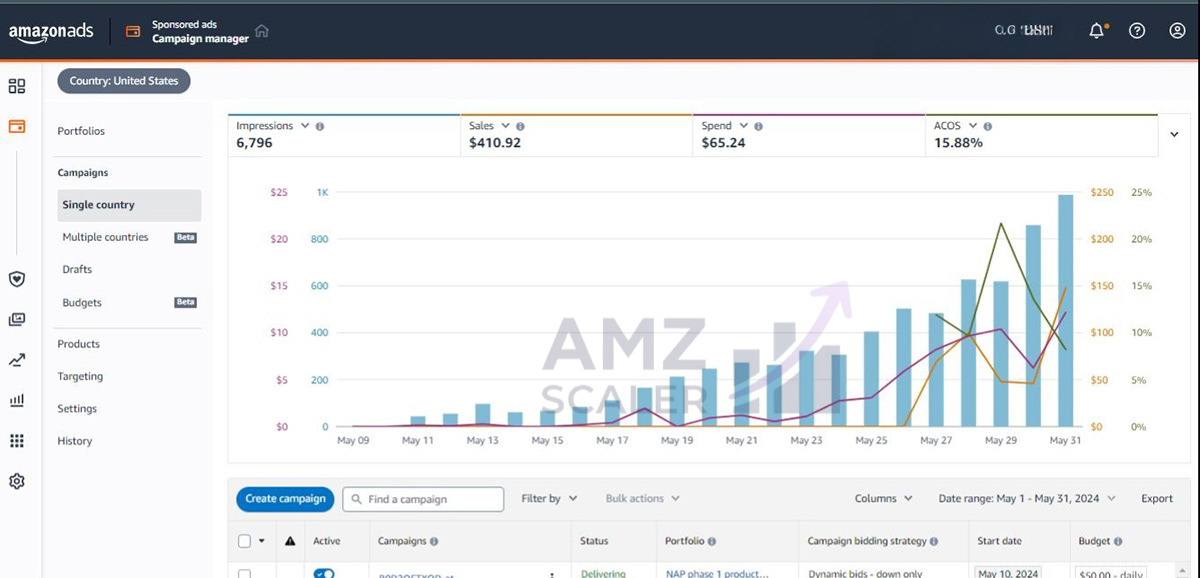
May. The account opened small and controlled, spending $65.24 to return $410.92 at a 15.88% ACoS, testing the ASIN-led approach before scaling it.
Month one: $65.24 of spend returning $410.92, May 2024. Source: Amazon Campaign Manager, client identifiers removed.
Month Seven: Where It Landed
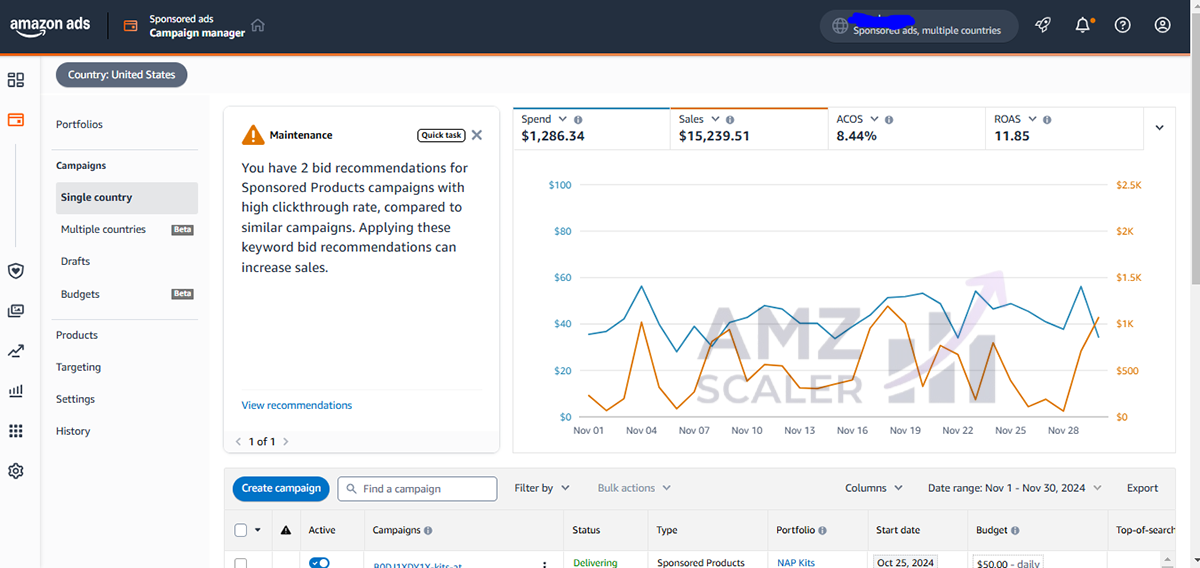
November. Spend of $1,286.34 returned $15,239.51 in ad sales at an 8.44% ACoS and an 11.85 ROAS. The strategy that started tiny and deliberate had become an efficient engine, without abandoning the low-cost approach that made it possible.
Month seven: $15,239 in ad sales at an 8.44% ACoS, November 2024.
Why the Tailored Approach Worked
The category dictated the strategy, not a template. A keyword-first approach would have spent the money on expensive clicks that rarely converted. Leading with ASIN targeting reached in-market shoppers at a fraction of the cost.
Low CPC made a small budget go far. Holding CPC under $0.70 meant the limited budget bought far more qualified traffic than it otherwise could, which is what let the account scale despite the constraint.
The winners were harvested, not left behind. Moving golden keywords from the ASIN campaigns into ranking campaigns turned early paid traction into lasting organic rank.
The Principle
There is no one-size-fits-all Amazon strategy. A tight budget in a competitive, low-conversion category needs a different plan than a well-funded launch in an open one. By leading with ASIN targeting and harvesting winners into ranking campaigns, this account scaled from $586 to $27,825 a month while ACoS fell to 8.44%. Results depend on each account’s competition, pricing, reviews, and inventory.
Working with a tight budget in a hard category? Our Amazon PPC management service designs the strategy around your constraints. See more outcomes on our client results page.
💡 Key Insights:
ACOS improved from 15% to 8.44% while TACOS dropped from 11.09% to 4.62%, indicating increasing efficiency and better overall profitability.
Organic sales share increased from 30% to 45%, showing strong improvement in keyword ranking and reduced dependency on paid traffic.
Want the full case study as a PDF? It includes every figure and the Ads Console screenshots, ready to share with your team.
Amazon advertising and listing specialists with 5+ years managing PPC and listing optimization for brands across the US, UK, and Canada. We publish what we apply in real seller accounts every day.