
The Amazon holiday return policy for 2026 is now in force, and this year Amazon has made it permanent. Items bought on Amazon.com between November 1 and December 31, 2026 can be returned until January 31, 2027, whether you sell through FBA or FBM, and Amazon says the policy “will apply every year” (Amazon Seller Forums). For sellers, that means a large share of Black Friday and Christmas refunds will land in January payouts, after you have already counted the sales. Here is what the rule covers, what a January return wave really costs, and what to set up before it arrives.
Quick Answer
Under the Amazon holiday return policy 2026, most items bought on Amazon.com from November 1 to December 31, 2026 can be returned until January 31, 2027. Apple-brand products must be returned by January 15, 2027. It applies automatically to FBA and FBM orders, sellers cannot opt out, and Amazon says it will repeat every year. Normal return conditions and non-returnable items stay the same. Plan for January refunds in your cash flow, and if you sell FBM, have prepaid return labels ready, because that rule starts on December 18, inside the window.
What Changed
Amazon has extended holiday returns for years, but the dates were announced fresh each autumn. The 2026 notice changes that:
| Rule | Detail |
|---|---|
| Purchase window | November 1 to December 31, 2026 (Amazon.com) |
| Return deadline | January 31, 2027 (Apple-brand products: January 15, 2027) |
| Who it covers | All items sold on Amazon.com, FBA and FBM alike |
| Seller action | None required, and no opt-out |
| Return conditions | Unchanged. Non-returnable and Final Sale items stay non-returnable |
| Future years | Amazon says the policy will apply every year |
Amazon posted the update to sellers on October 16, 2026, as reported by PPC Land. The key point most sellers miss: the window is measured from the purchase date, so a gift bought on November 20 can still come back on January 30, more than two months later.
What It Means: The Real Cost of a January Return
A refund does more than reverse the sale. On a refunded order, Amazon gives back the referral fee minus a refund administration fee (the lower of $5 or 20% of the referral fee in the US), the FBA fulfillment fee is not refunded, and the money you spent on ads to win the sale is gone (Nova). Here is an illustrative FBA product:
| Per unit (illustrative) | Amount |
|---|---|
| Price | $40.00 |
| Referral fee (15%) | $6.00 |
| FBA fulfillment fee | $6.50 |
| Product cost | $10.00 |
| Ad cost per sale | $6.00 |
| Profit if it stays sold | $11.50 |
If that unit comes back in January:
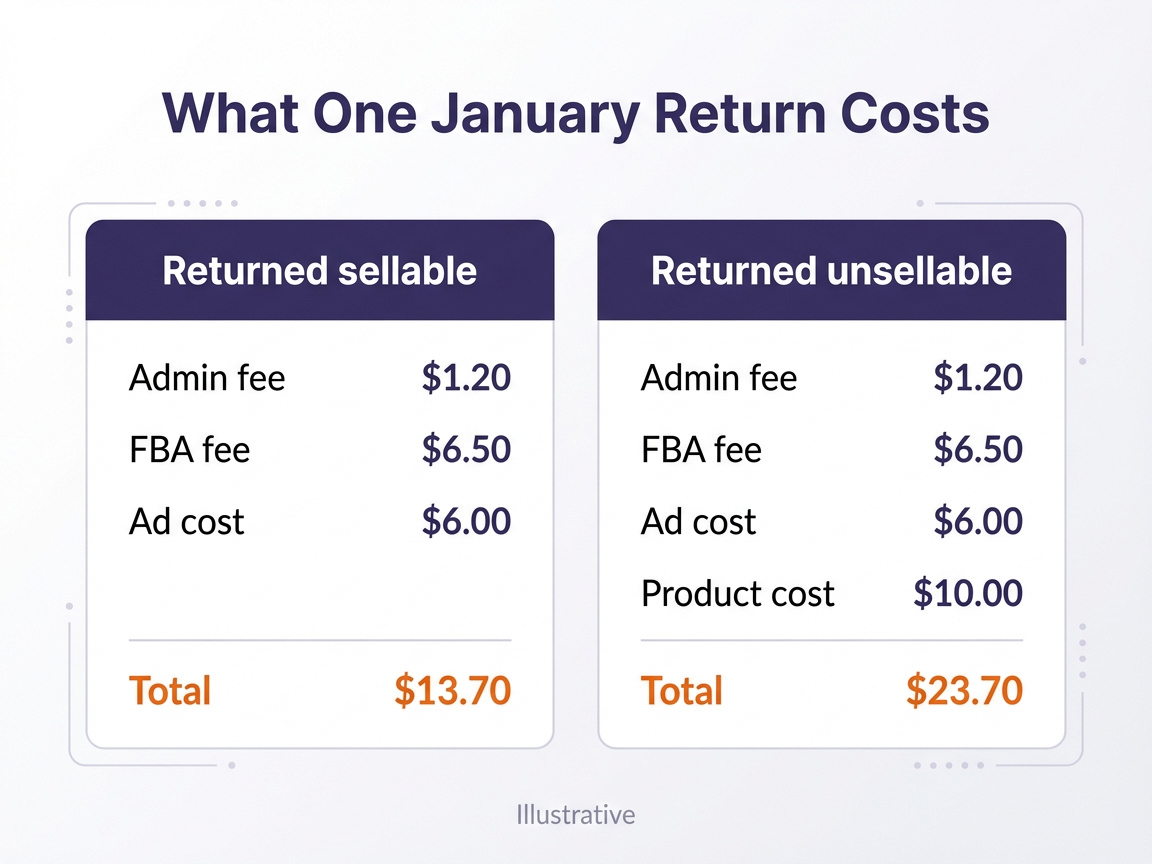
- Returned sellable: you lose the $1.20 admin fee, the $6.50 fulfillment fee and the $6.00 ad cost. That is $13.70, more than the profit the sale made.
- Returned unsellable: add the $10.00 product cost. That is $23.70.
Now scale it. Say this product sold 1,000 units over the holidays ($40,000) and 6% come back in January, 30% of them unsellable. That is 60 refunds: $2,400 of revenue reversed in January payouts, plus about $1,000 of real profit lost (42 × $13.70 plus 18 × $23.70). Your actual return rate and fees will differ, so run your own numbers, but the shape is the same for most products: holiday profit is smaller than the December dashboard shows.
What to Do Before the Returns Arrive
- Hold back cash for January. Estimate refunds from last year’s January returns, or use your normal return rate on November and December sales. Do not spend the whole December payout.
- FBM: set up prepaid labels now. Use the Manage seller-fulfilled returns workflow, not buyer messages. Decide which low-value items you will refund without asking for the item back. See our guide to returnless resolutions.
- Read return reasons weekly in January. “Not as described”, “wrong size” and “didn’t fit” usually point to listing gaps: images, size charts, bullets. Our post on partial refunds and return reasons explains which reasons cost you most.
- Watch the Frequently Returned badge. A January spike can push an ASIN into it right when you want to restart ads. See the Frequently Returned badge guide.
- Check FBA return reconciliation. If a customer was refunded but the unit never came back, or came back damaged by the warehouse, check the reimbursement options in Seller Central before the claim window closes.
- Judge Q4 ads on kept sales, not gross sales. If a January drop in sales looks like a ranking problem, check returns first. TACoS on net sales tells you more than December ACoS.
Related Reading
Frequently Asked Questions
Can I opt out of Amazon’s extended holiday return window?
No. The window applies automatically to all items sold on Amazon.com, FBA and FBM, and Amazon says no seller action is needed. Your normal return conditions still apply, and non-returnable items stay non-returnable.
Does the Amazon holiday return policy apply to FBM sellers?
Yes. FBM orders bought from November 1 to December 31, 2026 can be returned until January 31, 2027. From December 18, most US FBM returns also need a prepaid return label within seven days of the request.
Is the holiday return deadline January 31 every year now?
Amazon says the policy will apply every year. The 2025 and 2026 windows used the same dates (November 1 to December 31, returns by January 31), so plan for it as a standing rule, but check Amazon’s notice each autumn.
Ready for the January Return Wave?
Send us your store or ASIN. We check which listings drive avoidable returns, estimate your January refund exposure, and give you a written list of fixes to make before the window closes.
Free. No obligation. Useful findings even if we don’t work together.
See our listing optimization service and our client results.
Sources: Amazon Seller Forums, holiday return policy notice; PPC Land, Amazon makes its January 31 holiday return deadline an annual rule; Nova, are Amazon returns deducted from seller payouts.
Written by the AMZ Scaler Team
Amazon advertising and listing specialists with 5+ years managing PPC and listing optimization for brands across the US, UK, and Canada. We publish what we apply in real seller accounts every day.
More in Amazon News & Trends
- Amazon Liability Insurance Requirement: $1M Cover Now Needed in Safety Categories at Any Sales Level →
- Amazon’s 75-Character Title Limit Starts July 27: What to Do Now →
- Amazon’s FBM Handling Time Change: What to Do Now →
- Amazon’s 90% Business Hour Delivery Rate Rule: What FBM Sellers Must Do by September 30 →