An Amazon ranking campaign is a focused ad push meant to move a product up the organic results for a specific keyword. Done well, it turns paid sales into lasting organic rank. Done badly, it burns budget on clicks that never convert and leaves the product exactly where it started. Most failed ranking pushes fail for the same five reasons. This guide covers each mistake, how to fix it, and how to plan a ranking campaign that actually sticks.
Quick Answer
A ranking campaign works by driving consistent, converting sales on a target keyword so Amazon sees your product as relevant for it. The five most common mistakes are targeting the biggest keyword first, spreading budget across too many keywords, pushing a listing that does not convert, starting too close to peak season, and stopping spend abruptly once you reach page one. Fix the listing first, target a tight cluster of relevant keywords, and taper spend gradually.
Key Takeaways
Ranking campaigns earn rank through converting sales, not clicks. A weak listing makes every click more expensive.
Start with a tight cluster of 2 to 3 relevant keywords, including long-tail terms, before chasing the biggest head term.
Concentrated spend beats spreading the same budget across 15 or more keywords.
Plan pushes weeks before peak season, when clicks cost less.
Reaching page one is not the finish line. Reduce spend gradually so organic sales can take over.
Amazon ranks products for a search term partly on how well they sell for that term. A ranking campaign uses exact match ads on the keyword to generate those sales faster than organic traffic alone would. When the product keeps converting, organic position tends to improve, and the ads can be reduced. Our guide to how PPC affects organic ranking explains the connection in more detail.
The key word is converting. Clicks without orders do not help rank. They only cost money.
The 5 Ranking Campaign Mistakes
1. Chasing the biggest keyword first
A head term with huge search volume is tempting, but it is also where competition and CPCs are highest and where your product has the least proven relevance. Amazon’s own keyword targeting guide notes that long-tail keywords may have lower volume but can drive stronger conversion rates. Win those first, then move up to the head term with sales history behind you.
2. Spreading budget across 15 or more keywords
The same budget split across many keywords gives each one only a trickle of sales. Concentrate on a tight cluster of 2 to 3 closely related terms until the product holds a strong position, then add the next cluster.
3. Pushing a listing that does not convert
If the main image is weak, the price is off, or the bullets do not answer the obvious questions, a ranking push just buys expensive clicks that do not convert. Check your conversion rate against the category before spending. Our guide to why Amazon ads are not converting walks through the fixes.
4. Starting too late before peak season
Pushing rank in November means bidding at the most expensive time of year against every other brand doing the same. Ranking work done several weeks before a peak costs less and puts the product in position before demand arrives.
5. Cutting spend the moment you hit page one
Rank that was earned with ad-driven sales can slip if those sales disappear overnight. Reduce spend in steps, for example by 25% to 30% at a time, and watch whether organic sales hold before cutting further.
COMMON MISTAKE: Judging a ranking campaign on ACoS alone. A ranking push usually runs above your normal target for a while. Judge it on organic rank, organic sales, and TACoS over the following weeks, as explained in our guide to TACoS.
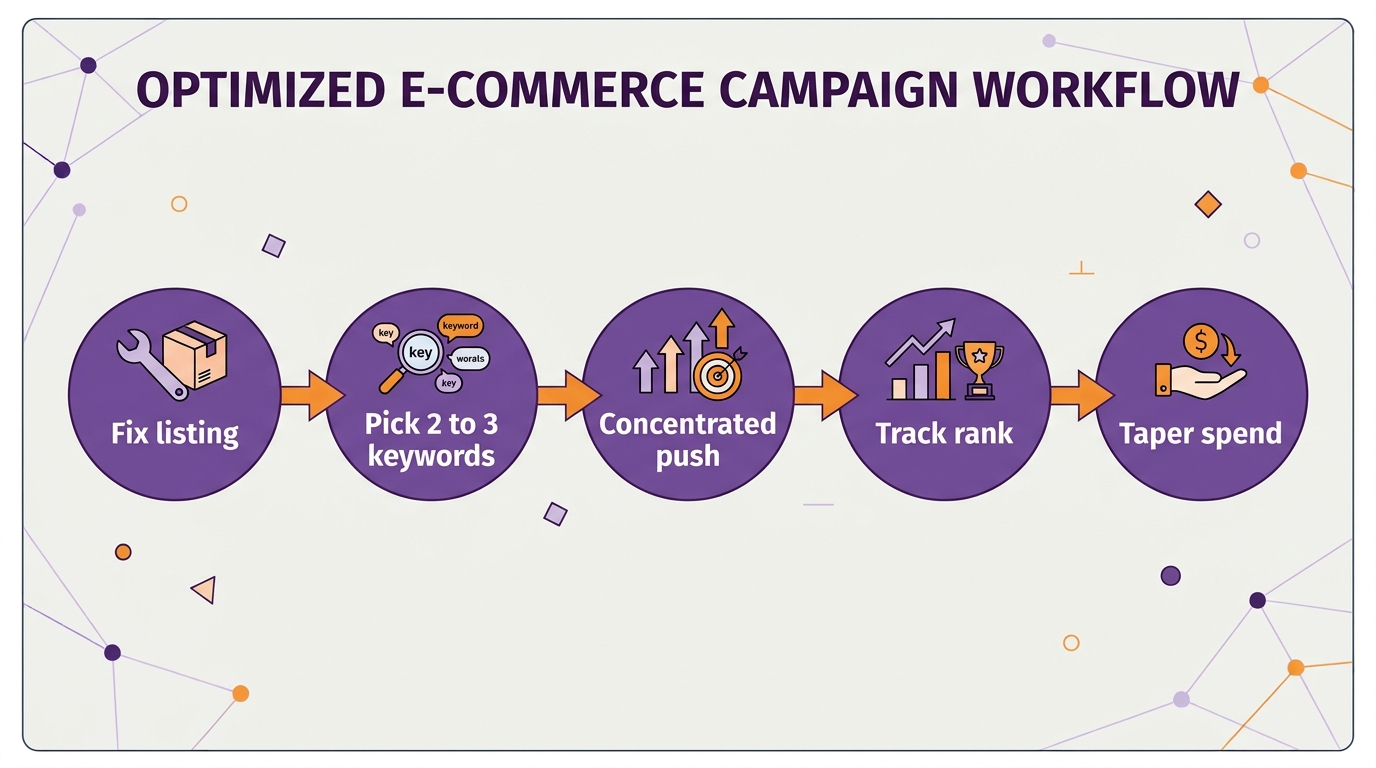
The five stages of a ranking campaign that sticks
How to Plan a Ranking Campaign
Check the listing. Conversion rate at or above the category average, strong main image, competitive price, and enough reviews to compete.
Pick the keyword cluster. Choose 2 to 3 highly relevant terms with real search volume. Our PPC keyword research guide shows how.
Use exact match. Amazon’s keyword guide describes exact match as showing ads only when shoppers search the keyword as entered, which keeps spend on the term you are ranking for.
Set a budget and a time limit. Decide in advance how much you will spend and for how long before you review.
Bid for visibility on the target term. Top of search placement usually matters most for ranking, so watch placement reports.
Taper in steps. Once organic rank holds, reduce spend gradually rather than switching off.
How to Know It Is Working
Signal
Healthy
Warning
Organic rank on target term
Rising week over week
Flat after several weeks of spend
Conversion rate on the term
At or above category average
Well below average
Organic sales
Growing
Flat while ad sales rise
TACoS
Falling after the push
Rising with no organic lift
Search Query Performance data shows your share of clicks and purchases for a term, which is the clearest view of whether you are gaining ground. See our SQP guide.
When NOT to Run a Ranking Campaign
The product converts below the category. Fix the listing first.
Stock is low. Running out mid-push throws the rank away.
The margin cannot carry a higher ACoS for a few weeks. Check your unit economics before you start.
The keyword is only loosely relevant. Ranking for a term shoppers do not buy your product for is expensive and rarely sticks.
It is a focused ad campaign, usually exact match, designed to drive converting sales on a specific keyword so the product climbs the organic results for that term.
How many keywords should a ranking campaign target?
Start with a tight cluster of 2 to 3 closely related, relevant keywords. Concentrated sales on a few terms work better than spreading the same budget across many.
How long does an Amazon ranking campaign take?
It depends on competition, conversion rate, and budget. Plan for several weeks and review organic rank weekly rather than expecting results in days.
Should I stop ads once my product reaches page one?
Not all at once. Reduce spend in steps of about 25% to 30% and watch whether organic sales and rank hold before cutting further.
Amazon advertising and listing specialists with 5+ years managing PPC and listing optimization for brands across the US, UK, and Canada. We publish what we apply in real seller accounts every day.